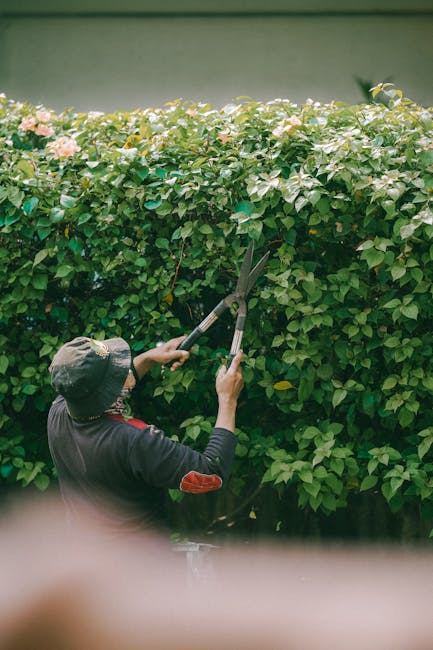
Licensed gardeners in Archway N19 proof of insurance guide
If you are hiring a gardener in Archway N19, proof of insurance should be one of the first things you ask for. Not because gardeners are automatically risky people in muddy boots, but because even a simple visit can involve tools, ladders, power equipment, uneven ground, broken pots, fences, or a neighbour's car parked a little too close. This licensed gardeners in Archway N19 proof of insurance guide explains what the paperwork should show, why it matters, and how to check it without making the process awkward. Truth be told, a good professional will expect the question.
Whether you need regular garden maintenance, hedge trimming, lawn work, clearance, or a larger landscaping job, the same principle applies: you want someone who works carefully, communicates clearly, and can back that up with the right cover. That is what this guide is for. It will help you compare options, avoid common mistakes, and feel more settled before work starts.
Table of Contents
- Why proof of insurance matters
- How the insurance check works
- Key benefits and practical advantages
- Who this is for and when it makes sense
- Step-by-step guidance
- Expert tips for better results
- Common mistakes to avoid
- Tools, resources and recommendations
- Law, compliance, standards and best practice
- Options, methods and comparison table
- Case study or real-world example
- Practical checklist
- Conclusion
- Frequently asked questions
Why Licensed gardeners in Archway N19 proof of insurance guide Matters
Insurance proof is not just a box to tick. It tells you that the gardener takes responsibility seriously and has planned for things that can go wrong. In a real garden, even the calmest job can turn messy fast. A mower can flick debris, a branch can fall the wrong way, or a water feature edge can get chipped while tools are being moved. If something does happen, insurance is there to help manage the fallout instead of leaving you stuck with an awkward conversation and a bill you were not expecting.
For homeowners, landlords, managing agents, and small businesses in Archway N19, the value is simple: fewer surprises. You are not only checking for skill with plants and outdoor spaces; you are checking whether the person you hire has the professional habits to protect your property and themselves. That matters even more on tight London streets, where access can be awkward and the margin for error feels smaller.
A lot of people assume insurance proof is only for major landscaping projects. Not really. A routine visit for lawn mowing or hedge trimming can still involve property damage, personal injury, or public liability questions. And if a contractor is hesitant to show evidence of cover, that is worth paying attention to. To be fair, it is one of those small moments that tells you a lot.
If you are already comparing services, it can help to look at the wider picture too. A professional approach often shows up across the board: clear pricing, sensible terms, and a visible focus on safety. You can see that sort of mindset reflected in pages like insurance and safety, health and safety policy, and terms and conditions.
How Licensed gardeners in Archway N19 proof of insurance guide Works
At a practical level, the process is pretty straightforward. You ask the gardener what insurance they hold, what it covers, and whether they can provide current evidence. Then you check the details against the type of work being done. A one-page certificate may be enough for an initial conversation, but for bigger jobs you may want a bit more clarity around the scope of cover.
The two terms you will hear most often are public liability insurance and employer's liability insurance. Public liability usually relates to damage or injury affecting third parties, such as a neighbour, visitor, or your property. Employer's liability is relevant if the business has staff. There may also be tool cover, professional indemnity in some cases, or additional protections for specific work, especially where trees, heavy equipment, or construction-adjacent tasks are involved.
In Archway, one thing you notice quickly is that gardens vary a lot. Some are compact terraces with narrow side access; others have shared entrances, basement steps, or split levels. The more complicated the layout, the more useful proper insurance becomes. A good gardener will not treat this as a formality. They will understand why you are asking.
For jobs such as garden clearance, landscaping, decking, or tree work, insurance checks matter even more. Those jobs can involve higher physical risk and more potential for accidental damage. If you want a sense of how those services fit together, the broader overview at services overview can help you see the bigger picture before deciding.
Key Benefits and Practical Advantages
The benefits of checking proof of insurance are both practical and psychological. The practical part is obvious: if something is damaged or someone is injured, there is a route for dealing with it. The psychological part is quieter but just as real. You can relax a bit more when you know the contractor is organised, careful, and willing to show paperwork without fuss.
- Lower financial risk: you are less likely to be left carrying the cost of an accident.
- Better contractor accountability: insured gardeners tend to operate with clearer processes.
- More confidence in the booking: especially for first-time customers or larger jobs.
- Improved trust for shared properties: useful where neighbours, tenants, or managing agents are involved.
- Better fit for complex work: helps when the job includes ladders, power tools, waste removal, or access challenges.
There is another advantage people do not always think about. Asking for proof of insurance often filters the market. The serious operators stay, the casual ones drift off. That is not a bad thing. It saves everyone time.
And if you are planning ongoing work rather than a one-off visit, insurance checks become part of a healthier long-term relationship. You are not just buying a tidy front border or a fresh lawn cut. You are setting a standard for how the work will be managed month after month. If your project also involves routine upkeep, garden maintenance and lawn mowing services are often the sort of jobs where consistency matters most.
Who This Is For and When It Makes Sense
This guide is useful for anyone who is about to hire gardening help in N19, but some readers will feel the value more immediately. Landlords want to reduce the chance of avoidable disputes. Homeowners want peace of mind when workers are on site. Businesses with small outdoor areas need to know that the job will not create a mess, a liability, or a headache for staff and visitors.
It also makes sense if the garden is already in a delicate state. Maybe the fencing is old, the paving is uneven, or there is a narrow path beside the house where a wheelbarrow has barely any room. In those situations, proof of insurance is not over-cautious. It is sensible.
You should especially pay attention if you are booking:
- hedge trimming near windows, walls, or boundaries
- tree lopping or removal
- garden clearance with bulky waste
- landscape gardening or hard landscaping
- decking work or structural outdoor improvements
For many people, this all starts with one simple question: "Can you show me your insurance?" A decent professional will answer it calmly, maybe even before you finish the sentence. If they do not, that tells you something too.
Step-by-Step Guidance
- Identify the type of work you need. A small tidy-up and a structural landscaping job do not carry the same level of risk, so the insurance expectations may differ a little.
- Ask early, not after the quote is accepted. This keeps the conversation normal and prevents misunderstandings later.
- Request the evidence in writing. A certificate, policy summary, or insurer-issued confirmation is usually more useful than a verbal "yes, we're covered."
- Check the basics. Look at the name of the insured business, policy dates, and the type of cover shown.
- Match the cover to the job. If the work involves ladders, trees, waste, tools, or multiple workers, make sure the cover seems appropriate for that.
- Ask about exclusions if needed. Some policies do not cover every activity. Better to know now than find out the hard way.
- Keep a copy for your records. If you are a landlord, agent, or business, this is especially useful.
- Confirm the booking terms. Insurance sits alongside clear scheduling, access arrangements, and payment terms. It all connects.
A tiny real-world detail here: if you are meeting a gardener on-site, the paperwork conversation often happens while standing in the cold by the shed, holding a cup of tea that has gone lukewarm. Not glamorous, but it works. And it tends to be a very revealing five minutes.
If you are unsure what to ask for, keep it simple. "What insurance do you carry for this type of work?" is usually enough to start. Then follow with, "Could I see a current certificate?" That is polite, direct, and perfectly normal.
Expert Tips for Better Results
After a while, you get a feel for the signs of a well-run gardening business. Here are a few that are worth noticing.
- Look for consistency, not just the cheapest number. A low quote can be tempting, but insurance, safety, and reliability matter more once the tools come out.
- Ask whether the cover matches the service. Someone doing routine maintenance may need different protection from someone doing tree removal or decking.
- Notice how they explain things. Clear, calm explanations usually suggest a clearer operation overall.
- Check whether they talk about safety before you ask. That is often a good sign. It means the business thinks ahead.
- Use the insurance conversation as part of the overall vetting process. You are also looking at punctuality, tidiness, communication, and respect for your space.
One useful habit is to compare the insurance discussion with the quote itself. If the quote is detailed, the scope is clear, and the wording feels specific rather than vague, that usually means the business is thinking properly about the job. That does not guarantee perfection, of course. Nothing does. But it is a strong start.
For larger projects, especially those involving structural changes or multiple service types, it can help to think beyond one-off tasks. For example, a client who starts with clearance may later need hedge work, garden maintenance, or landscaping. It is worth checking whether the same contractor can support that ongoing journey safely and consistently.
And yes, sometimes the best tip is simply: do not rush. A garden will still be there tomorrow morning.
Common Mistakes to Avoid
People make the same few mistakes when checking proof of insurance. They are easy to make, so no judgement here. Still, worth avoiding.
- Assuming "licensed" means insured. Those are not the same thing. Licensing, registration, trading style, and insurance are separate matters.
- Accepting verbal reassurance only. A polite promise is not evidence.
- Not checking dates. An old certificate does not prove current cover.
- Ignoring the type of work. General garden cover may not automatically suit tree work or heavier landscaping tasks.
- Forgetting about staff or subcontractors. If more than one person is attending, the insurance picture can change.
- Focusing only on price. Cheap can become expensive very quickly if there is a problem.
A smaller mistake, but a common one, is not asking follow-up questions. If a gardener seems reasonable but the documents are vague, ask again. You are not being difficult. You are being careful. There is a difference.
Also, watch for overconfident answers that sound polished but do not actually answer the question. "We've been doing this for years" is nice, but it is not proof of cover. Let's face it, plenty of things sound reassuring until you read the small print.
Tools, Resources and Recommendations
You do not need fancy tools to check proof of insurance, but a few simple habits make the process easier.
- A phone camera or scanner: useful for saving the certificate or policy summary.
- A basic checklist: so you remember to confirm policy dates, business name, and scope of cover.
- Your quote notes: useful for matching the work discussed with the insurance evidence provided.
- Property details: such as narrow access, shared boundaries, or fragile features that may affect the job.
If you want to compare service types before booking, the most useful starting points are often the pages that explain what the contractor actually does. For example, hedge trimming, garden clearance, tree lopping and removal, landscape gardening, and decking services each carry different expectations, so it helps to understand the scope before you talk cover.
For customers who also care about how a business operates day to day, supporting pages such as about us, pricing and quotes, and payment and security can tell you a lot about professionalism. Not everything important is in the insurance certificate; some of it lives in the way the company presents itself.
Law, Compliance, Standards, or Best Practice
In the UK, the exact insurance requirements can vary depending on the nature of the business, the work being carried out, and whether staff are employed. Rather than trying to treat every gardening job the same, it is smarter to look at accepted best practice.
For most customers, the key expectation is straightforward: the gardener should have appropriate, current insurance for the type of work being done, and they should be willing to evidence it. If the work involves employees, additional legal duties may apply. If it involves trees, access equipment, waste removal, or more technical landscaping, a stronger insurance profile is usually sensible.
It is also best practice for the contractor to operate with a visible safety mindset. That means risk awareness, tidy working methods, sensible use of tools, and a willingness to protect surrounding property. Pages such as health and safety policy and insurance and safety are the kind of signals that suggest the business takes these responsibilities seriously.
If you are a customer, you do not need to become an insurance expert. Really, you do not. But a little informed checking goes a long way. Ask for evidence, keep it on file, and make sure the cover seems proportionate to the job. That is the practical standard most people can live with.
Options, Methods, and Comparison Table
There are a few ways people typically handle the insurance check. Some are better than others, especially if the job is anything more than a quick mow.
| Method | What it gives you | Best for | Watch out for |
|---|---|---|---|
| Verbal reassurance only | A quick promise that cover exists | Very small, low-risk enquiries | No evidence, easy to misunderstand |
| Certificate review | Basic proof of current cover | Most routine garden jobs | May not show every exclusion or activity |
| Certificate plus scope check | Better match between work and policy | Hedge trimming, clearance, maintenance, basic landscaping | Takes a little longer, but worth it |
| Full pre-job paperwork review | Best clarity on responsibilities | Tree work, decking, larger projects, shared properties | Can feel formal, though that is usually a good sign |
If you are booking regular help, the certificate review plus scope check is usually the sweet spot. It is not overbearing, and it gives you enough reassurance to proceed with confidence. For larger or more complex work, more detail is better. It really is that simple.
Case Study or Real-World Example
A homeowner in Archway arranged for a gardener to clear an overgrown back garden after a long winter. The space had a narrow path, a heavy old planter, a rough patch of paving, and a fence panel that had seen better days. Nothing dramatic, but enough to make the job slightly awkward.
Before agreeing the work, the homeowner asked for proof of insurance and checked that the cover was current. The gardener provided a certificate, explained what the cover applied to, and confirmed that the team would be using appropriate tools for the access and surface conditions. That conversation took maybe ten minutes. No drama, no awkwardness.
On the day, the team turned up prepared, laid out their tools neatly, and protected the side return while moving waste. There was a small moment where a wheelbarrow bumped a paving edge. No damage, thankfully, but the homeowner later said that the insurance check had made the whole appointment feel more manageable. That is the real value here. Not fear. Just calm.
In jobs like that, a sensible process often matters more than a flashy promise. And yes, the garden looked miles better afterwards. You could almost hear the space breathing again.
Practical Checklist
Use this before confirming any gardener in Archway N19:
- Have you asked for proof of insurance in writing?
- Does the business name on the certificate match the person quoting?
- Is the cover current and valid for the job date?
- Does the policy seem suitable for the work being done?
- Have you checked whether staff or subcontractors are involved?
- Do you understand what is covered and what may be excluded?
- Have you kept a copy for your records?
- Have you also reviewed the scope, pricing, and timing of the job?
- Does the contractor communicate clearly about safety and access?
- Do you feel comfortable proceeding?
If you can answer yes to most of those, you are in a much stronger position. Not perfect, maybe, but properly informed. And that counts.
Get a free quote today and see how much you can save.
Conclusion
Proof of insurance is one of the simplest ways to separate a careful gardener from a careless one. It helps protect your property, supports smoother communication, and gives you confidence that the work is being handled professionally. In Archway N19, where gardens can be compact, access can be tight, and every inch matters, that peace of mind is worth a lot.
Use this guide as a practical filter. Ask early, check the evidence, match the cover to the job, and trust your judgement if something feels vague. A good gardener will not mind. In fact, the best ones usually appreciate a client who asks sensible questions.
That small bit of diligence at the start can save a lot of stress later. And honestly, that is a very fair trade.
Frequently Asked Questions
What does proof of insurance mean for a gardener?
It usually means a current certificate or policy summary showing that the gardener has cover in place for the type of work they do. You want evidence, not just reassurance.
Why should I ask for insurance before booking garden work?
Because accidents can happen even on simple jobs. Asking early helps you avoid surprises if there is damage, an injury, or a dispute about responsibility.
Is public liability insurance enough for all gardening jobs?
Not always. It may be suitable for many routine tasks, but larger or more technical work can need broader cover. The right answer depends on the job.
Do I need to check insurance for lawn mowing or hedge trimming?
Yes, it is still wise to check. Those jobs seem straightforward, but they still involve tools, movement around property, and potential damage.
What should I look for on the insurance certificate?
Check the business name, policy dates, and the type of cover listed. If the job is specialised, make sure the cover seems appropriate for that work too.
Can a gardener refuse to show proof of insurance?
They can, but it is a red flag. A professional business should normally be able to provide evidence without making it complicated.
Does proof of insurance mean the gardener is automatically trustworthy?
It is a strong positive sign, but not the whole picture. You should still consider communication, pricing, punctuality, and the clarity of the work plan.
Should landlords ask for proof of insurance too?
Absolutely. In fact, landlords and managing agents often benefit most from keeping a copy on file, especially for larger or repeated jobs.
What if the job involves tree work or garden clearance?
Then checking insurance becomes even more important. Those tasks can carry more risk, so you should be extra careful about scope and cover.
How often should I check a gardener's insurance?
At minimum, check before the first job. If you use the same gardener regularly, it is sensible to recheck from time to time, especially for new or bigger work.
Is a cheaper quote worth taking if the insurance looks fine?
Sometimes, but not always. Price matters, of course, yet the cheapest option is not necessarily the best if communication or service quality feels weak.
Where do I go next if I want a gardening service with a more professional approach?
Start by reviewing the service pages, the company background, and the policies that show how the business works. A thoughtful first conversation usually tells you a lot more than a flashy pitch ever will.